

BRAIN SCIENCE FOR EXECUTIVES
Current management science provides the means to understand managerial issues. Demands on senior executives, in contrast, require highly effective cognitive processing to evaluate mechanisms and variables from the leader’s perspective, with today’s environment calling for an unprecedented level of foresight and leadership abilities under uncertainty.
There is knowledge, however, that leaders and managers are not commonly accessing.
The Executive Program Neuroscience for Advanced Management provides access to core brain research-based knowledge immediately applicable to influencing organizational changes and mindful decision-making, with new perspectives providing novel insight into existing managerial practices.
Cutting-edge neuroscience knowledge tailored to respond to organizational needs is presented by internationally renowned and undisputed thought leaders in neuroscience and business, fostering profound personal and professional development.
THE ROI
Return to your organization with a novel, unconventional repertoire of cognitive tools, immediately usable or as contingencies demand.
The high-impact learning experience will challenge your older mindset: you will discard outdated principles and build a renewed, charismatic leadership of immediate impact.
You will return with an expanded insight into strategic thinking, a transformed perspective on your decision-making, and a vision for true innovation.



THE PROGRAMS
Two types of Programs are offered, preset Structured Programs and bespoke Tailored Programs.
Both Programs are chaired and taught by Faculty members recruited ad-hoc among the world thought leaders in the field. Capitalizing on the expanding nature of the neuroscience field in the areas of decision-making and judgement, the cadre of world-renowned experts in neuroscience, derived from the elite network of the leaders of the Neuroscience School of Advanced Studies, will bring cutting-edge knowledge to bear on the Programs offered.
Location:
Structured Programs are conducted in small retreat facilities on the Côte d’Azur, the Swiss Alps and other venues.
Tailored Programs may also be conducted elsewhere upon request.


Neuroscience Strategies for Advanced Management
5-day Programme
Next Programmes: July 2024, exact dates will be announced shortly
These Programs will explore in depth the Brain-Mind factor in change and disruption. The complex dynamics of today’s environment generate uncertainty about relationship between events, demand rapid changes and require that the brain be enabled to perform in such novel conditions How we respond to probabilistic uncertainty is a function of our own positive and negative perceptions of the impact of such uncertainty. The upside of perceived uncertainty in terms of hope and discovery versus the downside of perceived uncertainty in terms of fear and avoidance is key to effective leadership. Understanding these two conflicting forces within individuals and business communities is a key factor in computing mental processes under uncertainty and change and is therefore a critical element for building effective change strategies.
The Programs are suitable for C-level and upper-level executives with many years of experience.
Application
To apply, email us your biosketch and a brief statement describing the reasons for which you would like to participate in the Program. You may send these via email to:
secretariat@neurosas.org
Dates
The next Program will focus on The Management of Uncertainty and Change and will take place in July 2024 in the vicinity of Nice, France. Dates and Registration Fees will be announced shortly; the venue will be communicated to accepted applicants.
Programme Directors
Prof. Luigi Pulvirenti, Director, Neuroscience School of Advanced Studies, London
Prof. Hilke Plassmann, Professor, INSEAD, Paris
Registration Fees
Registration Fees, to be announced, include Program Tuition and Material.
Tailored Programmes
Different organisations have different cultures and different models of operation. These differences result in distinctive operational realities when confronted with pressure to change: together with the increasingly rapid cycle of change, they also highlight the need for tailored approaches to organisational change. Such tailored approaches place a premium on the need to recognise individual characteristics in organisational culture and operations. New and emerging neuroscience knowledge can be applied to specific organisational needs in order to tailor and optimise an organisation’s approach to supporting and guiding their people through change. The biological proofs stemming from brain research are the guiding principles of Programmes which will be tailored to your organisational needs. Flexible and moulded after individual needs, a tailored Programme will have different content and length. Both the private and public sectors benefit from the tailored Programs. In addition to the market-driven forces of uncertainty that are shared by the private and public sectors, the public sector has the additional challenge of political, policy and regulatory uncertainty, which is growing significantly higher in times of volatility in the ideological environment. Programmes can be tailored to address not only private sector uncertainty challenges but also public sector leadership and management challenges related to the increased uncertainty in government regulatory and political environments. Contact us for an initial evaluation of the specific needs of your organisation: secretariat@neurosas.org
DIRECTORS
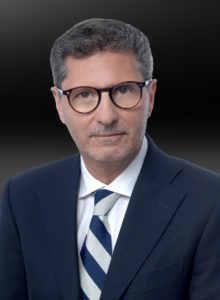
Prof. Luigi Pulvirenti is the Founder & Director of the Neuroscience School of Advanced Studies (NSAS). Considered the most advanced Forum for study retreats and debates in the neurosciences worldwide, the NSAS welcomes participants from the top research and clinical institutions, and the Faculty are exclusively the undisputed thought leaders, including Nobel laureates. Most of the NSAS attendees are university professors, an elite global network of researchers and clinicians seeking to acquire new analytical and strategic skills across areas of brain science.
Prof. Pulvirenti is a board-certified neurologist and has been, for more than two decades, Professor of Neuroscience at The Scripps Research Institute in La Jolla, California, where he has led a research group investigating the brain circuits and the molecular mechanisms responsible for mood disorders and addictions.
Funded by the National Institute of Health as well as by other public and private sources both in the US and overseas, his studies have been the topic of over 100 scientific publications. Focused on the understanding of molecular changes involved in the pathophysiology of emotional behavior, Prof. Pulvirenti’s research has explored the brain circuits of motivation responsible for the behavioral changes leading to the loss of control over drug use. He is the author on books on the Neurochemical Basis of Behavior and on the Addictive Brain.
Prof. Pulvirenti has served for the Prime Minister of Italy as Scientific Member of the Office for the National Drug Control Policy and as Professor in Medical Schools of Universities both in the US and Europe. He has chaired numerous international academic conferences worldwide and has received numerous recognitions and awards for academic leadership.
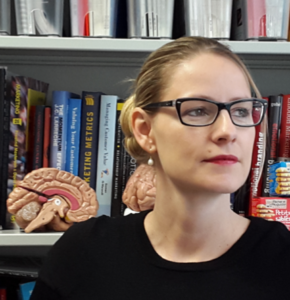
Hilke Plassmann is the Octapharma Chaired Professor of Decision Neuroscience in INSEAD’s Marketing Area. She is a Principal Investigator in the Social Affective Neuroscience Team at the Brain and Spine Institute (ICM) of Sorbonne University. She has been a visiting faculty at the Wharton School, NYU’s Stern School of Business and Bonn University and Affiliated Faculty at the Cognitive Neuroscience Unit of the Ecole Normale Superieure. In 2005, she earned a PhD in Marketing and Neuroscience (Dr.rer.pol) from the University of Münster´s School of Business and Economics, and then was a postdoctoral scholar at Stanford University and the California Institute of Technology.
Hilke is one of the pioneers in the nascent field of decision and consumer neuroscience. Her primary research areas are consumer decision-making and its strategic marketing implications at the intersection of neuroscience, psychology, and economics.
Her research has appeared in leading academic journals and has received international newspaper, radio, and TV coverage. Hilke has written several award-winning cases and has been an advisor to several large companies and start-ups.
FACULTY
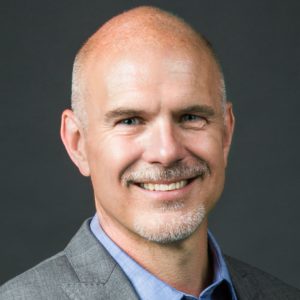


His academic publications in have appeared in the top international journals including Nature, Science, Neuron, Proceedings of the National Academy of Science and the Journal of the American Medical Association (Psychiatry). His work has been cited in the academic literature over 20,000 times. He is the author of: Decisions, Uncertainty and, the Brain: The Science of Neuroeconomics, 2003 from MIT Press. Winner of the American Association of Publishers Medical Sciences Book of the Year, 2003. Neuroeconomics. Decision Making and the Brain, 2009; 2013 from Academic Press. Foundations of Neuroeconomic Analysis, 2011 from Oxford University Press. Neuroeconomics. Decision Making and the Brain 2nd ed. 2013. He is the winner of the Margaret and Herman Sokol Faculty Award in the Sciences, 2003, of NYU’s Distinguished (Lifetime Accomplishment) Teaching Award, 2006 and of the American Association of Publishers Economics and Social Sciences Book of the Year Awards, 2009.
Lorem ipsum dolor sit amet, consectetur adipiscing elit. Ut elit tellus, luctus nec ullamcorper mattis, pulvinar dapibus leo.
Lorem ipsum dolor sit amet, consectetur adipiscing elit. Ut elit tellus, luctus nec ullamcorper mattis, pulvinar dapibus leo.
About us
The Neuroscience School of Advanced Studies (NSAS) is the Forum for Professional and Executive Higher Education for brain scientists. It is a non-profit organization operating worldwide, managed for the promotion of neuroscience research and its application for the benefit of society.
Sections of the NSAS include:
Advanced Neuroscience Courses. A Program of week-long study retreats among experts of the neurosciences in the biomedical field, including Nobel Laureates.
The Challenge Workshops. A Program for senior scientists where participants’ experiences are carefully deconstructed, reflected on, strengthened and reconstructed to achieve professional and personal breakthroughs.
The Neuroscience Summit. A yearly Forum designed to mobilize a select group of global thought leaders and scholars across areas of brain science, with the goal of charting a path for engaging global neuroscience leadership in future trends on a broad scale. It takes place in Crans-Montana, Switzerland.
The Executive Programs, part of which is the Neuroscience for Advanced Management, described on this website.